Showing posts with label naturopathic. Show all posts

Tuesday, August 28, 2018

THINX menstrual underwear

It's been almost 6 years since I ditched tampons and decided to use only re-usable menstrual wear. I wish I had the knowledge to start this earlier, but as new "trends" catch on, products become more available, and also more developed.

Starting with reusable pads from Charlie Banana and Lunapads, I instantly fell in love with real cotton. I was tired of noisy plastic wrappers and all the waste. Tampons - although totally convenient - weren't comfortable when they absorbed all the lubricating moisture of those tissues. I also couldn't believe how soft and absorbent cotton pads could be.

Then of course came THINX. A company with a brilliant product that found me on Facebook (damn FB algorithms and cookies... they know what I'm in the market for...). I was a little deterred by the price, but over the years I had already bought three diva cups (lost one during a move, the dog chewed up another - don't ask how she found it... she's a cleaver pup and at the time had an insatiable appetite for socks, underwear, and anything that smelled like dirty socks or underwear.). I also knew that this was something to invest in, for myself and to spread the word to other women.

I bought two pairs of small Hiphuggers and packed them for our trip to Italy when my next period was due to come.
** If you're wondering about size, I'm about 110 lbs, 5'4", the small is a little snug, but it's a good snug!

Well, a few things happened when I wore them:

First, I couldn't believe how comfortable they were! I wished all my underwear were this comfortable and absorbent. Ladies, I'm sure you understand. Sometimes even when we're not menstruating, there are certain days - especially in the time between the end of your period and ovulation - when you feel like you're leaking fluids. It's real and it happens.

Second, I wore a pair during the heaviest day of my period. This wouldn't have been a huge mistake had I timed how long I'd be wearing them for. It turns out, I had a much heavier day that I was expecting. Heavier than I'm used to. I also wanted this to be a true test so I didn't use the Diva Cup this time around.

Thinking about how often I need to change my Diva Cup, I thought I could go 8-10 hours in my THINX or so without needing to worry. I was extremely mistaken. After 4-5 hours I was still completely comfortable. My mistake was thinking I could then go on a 3-4-hour bike ride without the Diva cup or changing my pair of THINX.

The combination of long duration of wear, my heaviest day of flow (and way heavier than usual), and sitting on a bike for 3+ hours was enough for my THINX to leak. I was devastated. It's been a long time since I've felt sad about having my period. But leaking through my Lululemon shorts on a bike ride through the Tuscan countryside with my new husband almost had me in tears.

Luckily my husband works in sports medicine and knows exactly how to get blood stains out of clothing! Seriously... he was a genius. My lulu shorts were saved!

As for my THINX, they are still my most favourite pairs of underwear EVER, and even more great that I can wear them on lighter days with no need for anything else, or as backup with a Diva Cup. They may have leaked, but it was definitely situational.

I've used my THINX since that first cycle and haven't had any issues. They are also fantastic for wearing during sleep when you have your period.

I also want to point out that during this whole experiment, it was rare that I ever felt damp or wet, making THINX not messy at all to use! Washing is also simple. Rinse with cold water right after wear, then throw them in the laundry with your gentles and hang dry. It's amazing how much fluid they actually can hold.

Would I recommend them to other women? Absolutely! But if your periods are heavy, be prepared to change out a pair after 6 hours or so. Get your hands on a zipped water-resistant carrier bag, like this one from Lunapads which has 2 zipped sections, one to keep clean menstrual wear in, and one for dirty. And yes, of course I bought the "Dandy foxes" print... This is "Healthy Fox Adventures" after all!

lunapads.ca


Monday, June 4, 2018

How to Cure the "Hangry" - and it's not with extra snacks

Most of us have heard the word "hangry," which describes the irritability we can feel after not eating for a certain amount of time. In my clinical practice, the magic amount of time that patients say it takes is typically 3 hours. I need to eat every three hours, or I get shaky and really grumpy!

And it's not just what I'm hearing from others, but also what I've experienced first hand. We have a word for it in our family too... when someone starts acting irrational and grumpy because they haven't eaten in a couple hours...

But when you think about it, a few hours is practically nothing. Three hours, and our bodies are begging for food again? Seems a little illogical looking at how many calories we're consuming each day. So what's really happening and how can we fix it?

"Hangry" is a sign of blood sugar dysregulation, and it happens more often in those with higher carbohydrate diets. In a nutshell, consuming regular and relatively large amounts of refined carbohydrates and sugars as a main fuel source results in those sugars ending up in the bloodstream. This is what increases blood sugar levels and it requires insulin to pop up to let the sugar into the body's cells; as well, the liver will help store the sugar you're not using as glycogen.

Spikes and drops in blood sugar levels can definitely affect our mood and energy. It can also lead to further complications long-term like insulin resistance - where we continuously bombard our bodies with so much refined carbs/sugars that insulin can't meet the demand.

Apart from hypoglycaemic symptoms, insulin resistance is associated with obesity, PCOS, type 2 diabetes, and metabolic syndrome. As well, blood sugar dysregulation can lead to non-alcoholic fatty liver disease.

The good news is that blood sugar regulation can be corrected with dietary and lifestyle changes (the rate of which will depend on the individual). Here are some tips to get started:


  • Avoid eating at night, or eat only within a 12-hour window, max. Fasting for at least 12 hours will help train the body to not just use sugars/carbohydrates as a fuel source as you're not feeding yourself throughout the night. Therefore, the body tends to use up glycogen stores from the liver, and eventually fat if it needs it.
  • Reduce refined sugars and carbohydrates in the diet. This isn't to say that all grains are terrible for you, but you don't need them as much as our old food pyramids have historically told us. 
    • Avoid those daily breakfast sandwiches, muffins, scones, cookies, and excessive bread, pasta, and pizza intake. Try having 1-2 meals per day that have no grains in them at all. 
    • Avoid sweetened beverages. This also applies to your coffee and tea. Try replacing your sugar with honey, and then slowly wean down the amount that you add daily to your beverage. 
    • Avoid sweet alcoholic beverages, including ciders and mixed drinks with sugary sodas and juices; as well as liqueurs and "sweeter" drinks like rum, and wine. 
  • Include more healthy fats and protein into the diet. Fats and proteins are extremely filling, whereas after finishing a bowl of pasta, you may still reach for a piece of bread, able to eat another few bites. On the other hand, eating something with a high fat or protein content is more likely to leave you satiated. Aim for 20-30g of protein in your first meal of the day. Examples of helpful foods for fat and protein content include:
    • Avocados
    • Unsalted nuts/seeds, 
    • Eggs,
    • Lean cuts of meat, 
    • Fish, 
    • Protein smoothies (see below for recipe)
  • Exercise regularly. Physical activity has been shown to independently induce expression and translocation of the GLUT4 transporter, which helps to transport sugar/glucose into skeletal muscle cells. This is especially helpful for those with insulin resistance. 
  • Drink more water. Sometimes when we chronically feel hungry for carbs, it's not hunger at all. Try drinking a glass of (lemon) water first. Check-in with yourself to find out if your hunger is more just boredom, or thirst, before reaching for a snack. 
Fat-filled Protein Smoothie (1 serving)
In a high-powered blender, mix: 
- 1/2-1 cup unsweetened almond or coconut milk
- 2 tbsp hemp hearts
- handful or 4 strawberries 
- 1/4 cup blueberries OR 1/2 a banana
- 1 scoop whey isolate protein powder
- 1/2 an avocado

Although some people choose to go "cold turkey" with a new dietary plan, jumping in head first, I find changes tend to stick more when they are gradually introduced and practiced.  When we make dietary and lifestyle changes, give the body time to adjust. The key is in being consistent, and not allowing a lot of "cheat days." Even the idea of "everything in moderation" can cause major set backs if it pulls a person back into their old habits. 

Looking for extra resources and meal ideas? I find that blood sugar regulation can be positively influenced with both the Paleo diet and the Mediterranean diet. Both focus on fresh vegetables, and healthy fat sources like olive oil and fish. If paleo sounds too restrictive, then modify it. Allow yourself side dishes of quinoa, or brown rice. Or small portions of potatoes. View food as your body's fuel, and take it one day at a time. 

Friday, April 27, 2018

The Mindful Bride: Part 1, Planning and Executing

I wanted to do this series on being a bride, mostly because I found my experience to be quite different than many other brides, but also to help others who may feel like they are going crazy with planning, executing, and trying to enjoy their wedding day. There are steps to health & wellness in the face of stress and change, and everyday life. Being a bride and planning a wedding is no different; It can still be busy-making, stressful, and time consuming, so we can't forget about our own wellness during this process.

Here is Part 1: Wellness Guidelines for Planning and Executing, which is more about maintaining a clear head, not getting overwhelmed, and picking your battles. Part 2 will talk about actual self-care and stress management.

***

When you're about to get married, other married people loved to give you friendly warnings about what all could and will happen on your wedding day. I was told, my wedding day would fly by! That I would barely get a chance to enjoy it; There will always be something that goes wrong or not according to plan... I listened nicely to all of these warnings but I still believed that I could influence my experience as a bride.

At my wedding a few weekends ago, I did just that. People told me I was the most organized bride they've ever seen. My florist commented several times that I was one of the easiest brides she's ever worked with. Even my photographers exclaimed that they wish every bride was like me. 

I don't want my ego spin out of control, but I had to reflect on all of this feedback. What was I doing that other brides weren't?!

I will admit that I was incredibly organized - but this was made easier when I decided how much "stuff" we needed for our wedding. Perhaps you have grandiose ideas with extremely specific visuals in mind... maybe you have family or traditional obligations that you have to bend to. The point was that my husband and I chose what was right for us, and we didn't go overboard.

Rule #1: Less is more
You might think that you need 2-foot tall centrepieces to create a proper atmosphere. I will tell you that you can get away with a lot less. I had short, skinny $2 vases from Ikea and 3 roses in each.
We could have gone overboard, which is why it's so easy to become overwhelmed. It's okay to take a few non-essential items off your plate!

Items that we passed on included:

- Specialty late-night food station. Instead the venue/caterers supplied fruit, cheese and crackers;
- Videographer. We had a family member record our first dance. It wasn't worth paying $4000 to someone to film the day for us; especially as we had made such a great connection with our photographer. Finding her took time and luck; and it was more intimate without a film crew hovering over us.
- Extra entertainment. We felt the only entertainment our guests needed was a loving ceremony, an excellent dinner, and a lot of dancing!
- Extra flowers. I asked that all the bouquets be half the size of a classic bouquet. It saved us a ton of money and no one even noticed. Remember, the bigger the bouquet, the more you/your dress is covered.
- Fancy lights or smoke machines. Extra equipment needs to be rented, delivered, set up, taken down... We were able to dim the lights at our reception after dinner. That with some amazing music (and an open bar) was all we needed to have an incredible party. No special slide shows, screens, flashing dance floor lights were necessary.
- A Calligrapher or specialty invitations. I hand wrote out all the addresses on envelops for our invitations, and I used VistaPrint for all of our stationary. We mailed out 2 cards and one return envelope. We had our directions and Inn booking information on the back of the invite. We saved paper and money! If you don't want to hand-write out your envelopes, use a label maker or your printer.
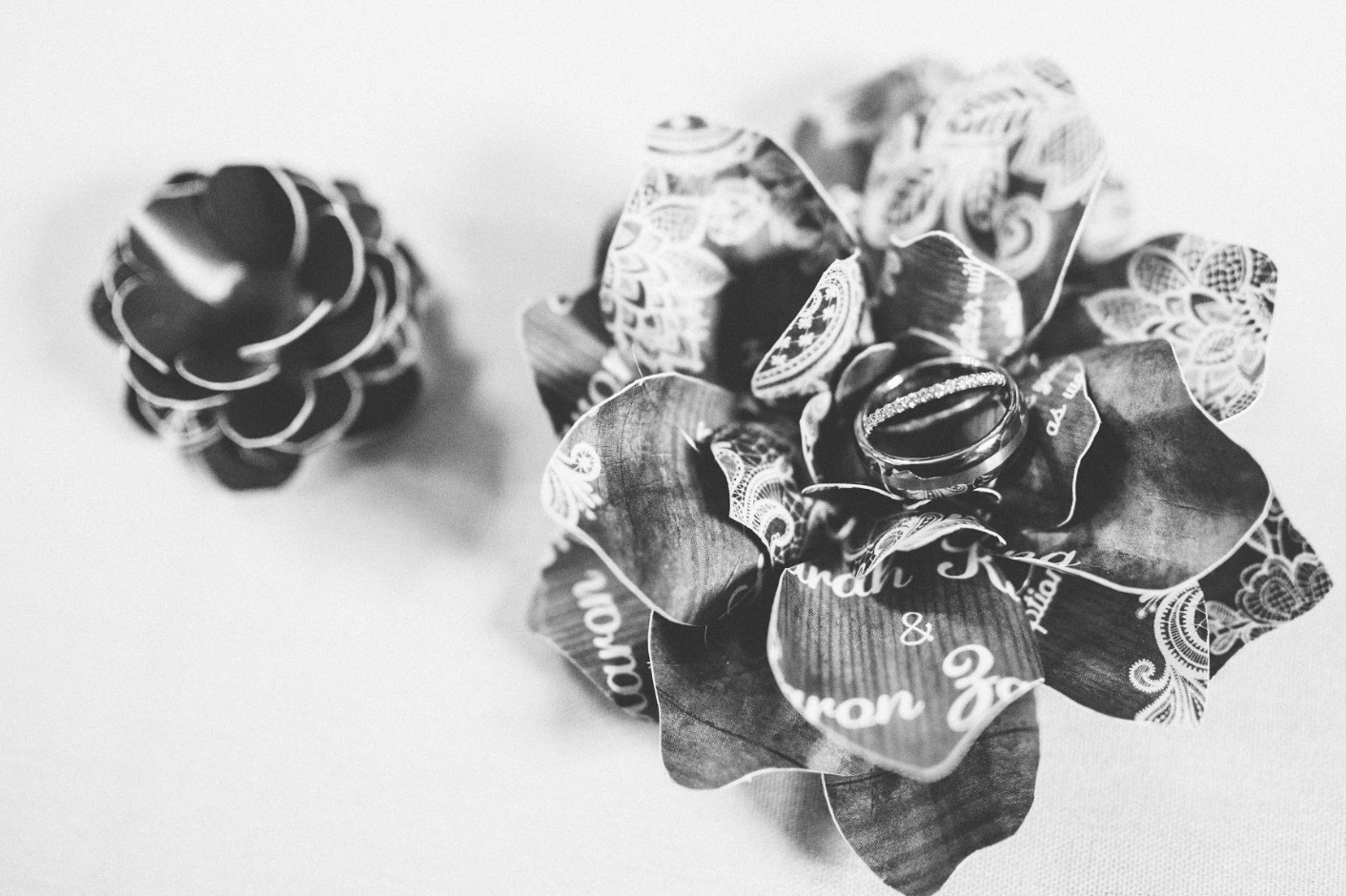
- Special DIY projects. I picked one and it was because I had made a huge mistake: I ordered twice as many invitations as I actually needed. I thought, How could I repurpose all of these card stock invitations? Then I remembered that my mom had recently bought me a book on making paper flowers. So I packed up the invites, drove to her house, and we spent a day together making flowers out of my invitations:
It started off fun, watching chick flicks and cliche wedding movies while we cut out dozens of stencilled petals... but by the end of the day we had only completed 10 flowers between the two of us. It was gruelling and time consuming. But the truth is that we were able to use them without needing 100 of them. They were accent decor, not "mandatory" at every table. I was totally happy with that... as were my blistered hands.

DIY projects are fun and great ideas in hindsight. Some of them might actually be quite doable. But don't feel like you need to put intricate work into something for every single guest - Unless you have the time, patience, and the passion for such a project.

It's okay if you want these things. It's your wedding and you can create the day however you like. But there are times when you need to let things go. They are seriously not worth it.

A friend of mine who is an incredible baker made cookies and brownies for the end of the night at her own wedding. Our venue allowed the same and I had planned on doing some baking for ours as well (otherwise what's the point of owning a Kitchenaid mixer?). But the week before the wedding my schedule got slammed - and not just with wedding stuff... but work, and family, and other commitments. I was exhausted and baking wasn't going to happen. At that point I really didn't care. I didn't even tell the venue until I arrived on the day-of. It wasn't a big deal, but I'm glad I made the decision to let it go.

Rule #2: Avoid overreacting. 

Things go wrong. People have very loud opinions and expectations.
Our planned outdoor ceremony ended up being moved indoors due to a freak ice storm in the middle of April. One of the worst storms in Toronto in years, with rain, freezing rain, snow, slush and ice all within 24 hours. We had an entire table not show up, and even our officiant was a little late to arrive. Shit happens. It wasn't going to stop us from getting married. Nothing would. There was no point in getting angry. We were still getting married, and everything in my eyes was still as perfect as it could be.

But even if something had gone wrong that was someone's obvious fault; there's nothing good that comes out of going full dragon. The important point is to keep a level head. Exhale a deep breath, and then find a solution. One of the best parts of being the bride? You have a team of people who are there for you to troubleshoot.

Our venue (which was also an Inn) made multiple errors with room bookings and didn't have the room I requested available for getting ready in. So as I had my manicure done, my sister went up to the front desk and fixed it all. I didn't stress for a second. The issue would be fixed, or we would somehow find a solution (or another room). There's always a way to make things work. The goal is to not fight the resolution.

And remember - you're getting married! This is a happy day of celebration and everyone is there in support of you and your partner! Create and nurture the positive energy that you want surrounding you on your day.

Rule #3: Let the experts do their job - and trust them!

So you shelled out a few thousand dollars on photography... perhaps hundreds if not thousands on flowers (You've seen these weddings on Pinterest!). There's a reason you're paying so much: You are paying a professional for their time and their skill. Sure, there's the cost of materials, but you sought out your specific vendors because you thought they were the best in your price range, and you seem to really connect with them.

I gave our florist an idea of what I wanted, with flower types and colours, but I honestly had no idea what was in season. She guided me to combinations that ended up being incredible. She put together the most beautiful bouquets, and they were all so simple and romantic. Even when it came to the ribbon around the stems, she made a recommendation and not only did I love it, but I trusted her that it would look amazing (and she didn't disappoint).

Trust your experts. Try to avoid harassing them with phone calls and emails with changes and demands. I'm not saying that you shouldn't stick up for what you want or what you're asking for, but keep an open mind and understand that these people work weddings for a living.

Even if it's not exactly as you had pictured it in your head, try to see the beauty in it. See the love and the handiwork that went into each piece from your vendors/experts.

Rule #4: Call upon your think tank, but avoid getting too many opinions

There were multiple times where I had to make silly little decisions (like, which font looks better for the seating chart?) and I got a little overwhelmed with indecision (mostly because I didn't care about seating chart fonts... I just wanted it to be legible for our guests). Instead of just picking something, I would call upon one of my bridesmaids, or my sister, or mom, or, if the decision was more crucial than fonts, I would bring in my fiancé. I would have 3-4 options ready, then I would ask 1-2 people for their opinion - never more than that. Any more opinions and you will second guess yourself, and now you're trying to please the crowd. Once a decision was made, we stuck to it and moved on.

There's no need to dwell on the tiniest details; but you're also allowed some help in making those decisions. Back to Rule #1: Less is more. You don't need your whole posse there for you when you try on wedding dresses or meet with your florist. Pick one person and enjoy the experience. If you find there's someone who's opinion on the matter would mean a lot to you, then go home and come back another day with that person.

For our wedding cupcakes I went by myself to put down the deposit and then brought home a few different varieties/flavours of cupcakes home for my fiancé so that he could help choose the flavour that we would serve. The point is that you don't have to do everything alone. It's okay to ask for help.

***

I understand that my situation will not apply to everyone, but I hope that these little tidbits of advice will help others beyond the typical "warnings" that women hear. A warning isn't always helpful but guidance on how to better manage the wedding planning and execution is. And that is my hope for today's blog post. I'll be posting again soon for Part 2: Self-Care for the Mindful Bride

Thursday, February 8, 2018

Treating skin conditions: Part 2 - From the inside, out

Although soothing and cleansing your skin with creams and oils can make a huge difference in skin healing, the root cause of many inflammatory skin conditions comes from inside the body.

The challenge is in figuring out which part of your system has been compromised, as there are multiple reasons why we break out in acne, psoriasis, or eczema. Although each one of these disorders is unique, they all share the common thread of being inflammatory in nature, and typically arising from an internal disorder.

Common culprits of inflammatory skin disorders:

  • Food sensitivities: IgG immune system reactions
  • Stress, leading to chronically abnormal cortisol levels
  • Hormonal fluctuations, as with estrogen and testosterone
  • Dietary nutrient deficiencies or insufficiencies, such as, essential fatty acids, vitamin A, vitamin B5, vitamin D, and zinc.
  • Compromised or delayed liver detoxification pathways leading to increased toxin and/or metabolite burden.
  • Oxidative damage from an imbalance in free radical production vs antioxidant action.
  • Insulin resistance
  • Inflammatory bowel disorders: causes a barrier disruption and give substances like toxins, allergens, and microbes greater access to your system. 
  • An immune system imbalance, promoting a greater TH2 response and suppressing TH1 responses --> more serum IgE --> "allergic diseases" including eczema and asthma.
The detective work can be frustrating for a lot of people. A medical doctor can give you a steroid cream and they work really well at suppressing skin inflammation. Lesions will easily disappear in a matter of hours or days. But once you stop using them, many eczema sufferers find their lesions come right back, just as fast. So, by needing to take weeks, or even months, to get to the root cause of the problem without the use of steroid creams, it can be frustrating for many. 

It is also important to note that steroid creams can cause skin thinning, and therefore should be avoided on or around delicate skin (like around the eyes).

The bright side is that it can get better. A lot better. Treatment requires patience but is well worth it when you realize that you're not only fixing your skin, but you're creating a healthier body inside as well. 

For example, you might resolve skin lesions by changing the diet and improving the gut microbiome. In treating the gut as the root cause, we also improve digestion and can lessen symptoms of IBS like gas and bloating. 

As another example, in treating the immune system, and promoting TH1 responses with substances such as echinacea, reishi mushroom, plant sterols, and others, we could potentially see a decrease in concurrent asthma or sinusitis symptoms. 

There are multiple ways to treat skin conditions internally, but figuring out the root cause and correcting it is a process. The good news is that we are not limited only to the quick-fix of steroid creams - though they can be helpful at times! 

What can you expect when you see a naturopathic doctor (ND)?

An initial appointment is often 60-90 minutes in order to get a full picture of your health and health history. A physical exam may be warranted, at least to visualize any current lesions. In some cases, your ND may feel it necessary (or will give you the option) of having tests run to rule out specific causes. 

Examples of tests that may be run:
  • Blood glucose/sugar levels, testing fasting blood glucose, HbA1C, and fasting blood insulin
  • IgG Food Sensitivity test (often done as a finger prick or blood test): Can outline each specific food that your immune system is reacting to. 
  • 4-point cortisol test to monitor your cortisol levels throughout the day
  • A blood test for the hormones such as FSH, LH, and androgens (to help rule out PCOS and androgen-related acne)
Otherwise, treatment is often started right away based on your intake information and physical exam. This may include:
  • Dietary changes and modifying eating habits
  • Modifying the gut microbiome with probiotics or probiotic foods to improve immune responses
  • Botanicals and medicinal mushrooms to promote TH1 responses
  • Antioxidant, vitamin and nutrient supplementation
  • Working on stress management 
  • Avoiding exposure to toxins and irritants
  • Promoting phase 1 and phase 2 liver detoxification pathways with either food or supplementation
(Be sure to seek individualized advice and treatment from a licensed naturopathic doctor before starting any supplement or major dietary change. The above is for educational purposes only)

Tuesday, January 31, 2017

The Value of Naturopathic Care

I get it. We have free medical healthcare in Canada. Here in Ontario, our government pays for emergency room visits, surgeries, walk-in clinics, basic medical care, and for seniors, a HUGE portion of their prescription costs.

If you visit a walk-in clinic without your government "Health Card" and pay for services, a 10 minute visit with an MD can cost about $110. Yes, that's $11 for each minute you spend with that doctor. The doctor that must take your information, and very quickly use their clinical knowledge to figure out what (if anything) they can do for you.

As an ND, I realize that fees can be alarming if you're not used to paying for healthcare. However, the service you're receiving is much different than that of an MD, and we both paid about the same amount for our education (a 4-year undergraduate degree, plus 4 years of post-secondary medical education).

An ND (Naturopathic doctor) will:
  • Spend 90 minutes with you on the first visit (This may range between 1-2 hours depending on the naturopath. My initial visits are 1.5 hours)
  • Take a thorough health history including details on your: sleep, mood, energy, diet, appetite, stress, temperature, and more. 
  • Whenever possible, treat the root cause, not just your symptoms. 
    • Sure, we also want to give you symptom relief, but we focus on interventions or treatments that address the cause. 
  •  Consider the big picture - treating you as a whole
    • ND's tend to take all of you (your symptoms, your lifestyle, your views) into account when making a treatment plan. There is rarely a "one-size-fits-all" treatment. 
  • Help you with positive diet choices for your specific needs
    • ND's have a minimum of 4 years education in nutrition - a signifiant difference from the minimal training an MD gets. We can help you with hormone balancing, weight loss and specific diets for medical conditions such as IBD, PCOS, and weight loss. 
  • We combine the medical aspect (blood work, physical exams, diagnosis) with the holistic: incorporating lifestyle choices to improve your health. For example, part of an ND's prescription might be 5 minutes of meditation, or daily puzzles for mental cognition and brain function. 
  • We offer many additional services to your average medical care, including (but not limited to): IV therapy, acupuncture (based on Traditional Chinese Medicine), B12 injections, and infrared sauna treatment.
  • Our goals are for you to live a healthier life, improve your feeling of wellness and allow you to age well. We want to you to optimize your health and be the best you. 
Our emergency medical system and public health is an absolute necessity for our healthcare, but there are times when conventional medicine doesn't have the answers, or there are no other treatments that can be offered. But there are more options available. There are always alternative treatments, whether it be from an ND, and osteopath, a chiropractor, or other practitioner.

Paying for your health now is like paying for a healthier future; paying for the tools to manage stress or anxiety; paying for someone to truly listen to you - and to everything on your list; paying now, so you don't pay in body pains and illness later. It's an investment in you. 

Wednesday, May 18, 2016

Do we really need to take supplements?

Supplements have gotten a bit of a bad reputation much to do with the lack of proper regulation. The media has reported that some products have been found to not contain the ingredients listed on the label, or in much smaller amounts than advertised. I like to believe that Canada is a little more restrictive than our neighbours to the south; It's common to find many "performance enhancing" supplements filled with steroids and sildenifil or similar drugs (the generic form of Viagra) at gas stations around the country.

Regardless of these incidents, there are still many great supplement companies who perform third party testing and whose products are standardized to contain the exact compounds and amounts of those compounds in each tablet/capsule.

As a naturopathic doctor I'm extremely picky with which companies I prescribe or recommend. But in recommending a higher quality product, the cost of certain supplements also goes up. So do we really need to spend hundreds of dollars on supplements? Do they actually do anything for you?

That all depends on you, your diet and your health status. Most people don't need to take supplements to survive, but they definitely have a role in optimizing your health.

Here's an example: do we all need probiotics? We need beneficial bacteria in our guts for proper digestion (and many other things!). Without a good gut microflora we experience gas, bloating, constipation or loose stools. Long standing, we may experience low mood or depression and a lower functioning immune system, including skin rashes. By incorporating fibre (vegetables) in your diet each and every day we eliminate the need to take high doses of probiotics as fibre helps to feed the good bacteria in your large intestine. However, if your gut bacteria has been out of balance for a while, taking a probiotic can help to repopulate your gut faster and crowd-out all the "bad" bacteria. In this example, taking a supplement (probiotic) will help you to feel better sooner.

Supplements in general aren't needed by everyone, but again, they optimize your well-being. Sometimes I forget exactly how many supplements I take daily - there's a lot of them! But I truly feel better on them. For most supplements, it can take up to three months to feel an effect. In some cases you might not even notice a difference but your blood work says otherwise. For example, using a high quality fish oil to manage cholesterol and triglyceride levels.

I would also bet that 90% of Canadians have less than optimal vitamin D status. Due to our winters, and decreased sun exposure, many of us don't get enough vitamin D.  You may or may not notice any differences, but when your vitamin D levels are in a certain range, you decrease your risk for cancer, bone fractures, heart attack (men), and multiple sclerosis (click here for references).

I personally would still rather take multiple supplements now than to be on medications later in life, or even right now. By taking certain vitamins and botanical formulas, I'm decreasing my need to take ibuprofen (generic Advil) or naproxen. These over-the-counter medications have been around for years and seemed benign, but we've recently learned that NSAID's such as ibuprofen may lead to adverse effects such as heart attacks and stroke, as reported to Health Canada. Now someone who takes ibuprofen maybe once or twice per year is less likely to experience this, but for females who take Advil for 1-2 days each month to handle menstrual cramps... it all adds up, and personally it makes me very uncomfortable.

Instead I'll keep up with my fish oil, B6 complex and botanical formula (and even acupuncture!) to decrease the need for these pharmaceutical anti-inflammatories and pain relievers.

So do we really need to take dozens of supplements and spend all this money on them? That's an investment I'm willing to make and I encourage you to have your supplements reviewed by a naturopathic doctor. An ND can tell you if what you're taking is the best for your health situation, and also if the product you're currently taking is the best one for your money. As an example, several B vitamins such as B6 and B12 are available as cheap synthetic forms, but also as more bio-available forms - forms where your body doesn't need to take it and turn it into the "active" form. So what's the point in wasting money on a vitamin that you might not be absorbing? This is also a huge problem with multivitamins - but that's a topic for the next blog post.

The other issue is that we confuse all supplements with being "natural" when in fact many of them come with their own "warnings" or contraindications. Your individual allergies and health issues can be exacerbated with certain supplements, so make sure that you'r not just grabbing anything off the shelf - a naturopathic assessment is crucial for your safety.

Don't let the media influence you in avoiding all supplements. There are terrible companies out there and there are fantastic, responsible ones as well. Supplements are for improving your quality of life, preventing disease and optimizing your body's overall performance. We don't all need them, but they can really influence our health and proper functioning of our bodies. 

Monday, March 14, 2016

10 ways to avoid catching colds and flus

It's that time where we all seem to be sharing our lovely germs. The common cold, flu, bronchitis, sinus infections, ear infections... they're everywhere!

So how can you prevent yourself from catching them? Here are a few tips to ward off those illness-inducing viruses and bacteria when everyone else around you is sick:

1) It goes without saying, but I'll do it anyway: Hand washing. If you shake someone's hand out of politeness, make sure you wash those hands before eating anything, touching your face, or shaking anyone else's hand.

2) In reference to #1, wash your grocery produce. Now imagine all of those people who all shook hands, or who touched a door handle that were sick and now they're at the grocery store picking up tomatoes and testing them for firmness (because that's just a thing we do). Give that tomato a nice thorough rinse with water before cutting into it and adding it to your plate. This can eliminate up to 98% of bacteria on the surface of your fruit and veggies.

3) I'm not one for over-sanitizing, but when everyone else in your house is sick, I'd suggest disinfecting door handles, light switches and faucet handles as these are the easiest to get re-infected.

4) Vitamin C: 1000mg of vitamin C per day is great for your immune system and for your adrenal glands (the ones that deal with stress and secrete a bunch of your hormones). Once you're sick this might not do as much for you, but it's great for prevention!

5) Echinacea and other immune system-modulating botanicals: Talk to your naturopath about a botanical formula that can help your immune system. Certain antiviral herbs and adaptogens (botanicals that support a healthy stress response) can help the functioning of your immune system, boost its response to pathogens and also work on reducing your chances of getting sick. But keep in mind that everyone is different. What gets recommended to you might not be recommended for your bestie or neighbour.

6) FLUIDS! Drink lots of water (about 2L for the average person). Especially if you're feeling a sore throat coming on; drinking water helps to keep things moving down and out of your system.

7) Avoid sugar. A dose of sugar can depress your immune system for up to 6 hours after ingestion.

8) Stress management. Keeping your cool puts less stress on your body and its defences. You might feel fine during periods of high stress, but as soon as you relax again, your immune system also takes a breather and this is often when we get sick. For all the students out there I call it "post-exam period illness".
- work on breathing exercises, go for a walk in nature, journal, practice yoga, sing in the car (or the shower), draw or colour something!

9) Get enough sleep! If you're not getting enough sleep during the week, make it up on weekends. Sleep deficit exists! Rest and recharge your body.

10) Improve your gut health. Eating a diet rich in vegetables, and low in sugars can provide key antioxidants and nutrients to help your body run efficiently. Your naturopath may also recommend certain probiotic strains to assist your gut and immune health.

Tuesday, December 15, 2015

Why coffee isn't helping to correct your fatigue

We see it way too often. Towns and cities full of people, waking up tired and going straight for the coffee. Many of us - like myself - love coffee for its aromas, its taste and the ritual of a morning coffee. Oh the ritual! The careful preparation, the feeling of warm mug in our hands, and the thorough enjoyment of each slow sip.

But too many people take these things for granted. Coffee has a purpose and that purpose is energy! It's to wake up. To be able to function! They walk around with their 16oz or larger cups filled with the hot brown liquid. Coffee pots containing 12 servings are gone by lunch time. And do they feel any better? The answer is usually no. They need it to get through the day. But what these people don't know is that their 10-person family-size serving of daily coffee can be acting against them.

First, this is way too much caffeine, but it never seems like it to a "chronic, high-dose" coffee-drinker. This is because our bodies become accustom to these levels of caffeine. One or two cups is no longer enough. Your body knows what you've been giving it. Try to cheap out, and you don't feel the same. The more you consume, the more you get used to it, and the more you need to function at the same level. To make matters more complicated, caffeine can actually intensify anxiety. Feeling anxious like Tweak from South Park? Yeah, your coffee is making that worse.

Yes, you can function on lots of caffeine. Maybe it really does get you through your day. But aren't you just burning through "false" energy? I mean, a little caffeine can be a great help, but what are you teaching your body? We don't have enough energy but we have to keep going! Keep pushing! Keep moving! Keep working and work harder! You've exhausted your system.

In my experience, many of us "type-A" personalities are at the most risk. We can power through anything - and we'll use what we need to to get the job done; to stay up studying, and to stay focused. But we're forgetting something key: Our energy building blocks. We keep burning through such a "Yang" energy - this quick, "hot", full-speed type energy - we need to also build our "Yin" side: the substance and matter. For example, where running and cardio are Yang, Tai Chi or Yoga would be Yin. You can even attend a Yin Yoga class. They're everywhere!

So how do we help build up our energy and actually help our bodies with recovery instead of  continuously burning through energy that we don't have in the first place?

1). Slowly wean down the coffee. Every few days have smaller and smaller amounts of coffee. This won't be fun, but you'll have less withdrawal effects compared with cold turkey. Get yourself down to 2 8oz cups per day.
OR
Cut out caffeine cold turkey and have a week-long wash out period. Then you can start again with 1 cup (8oz) per day. Notice how differently and well you respond to just 1 cup of coffee, instead of 12.

2) Talk to your naturopathic doctor about which botanical formulas, or single herbs, would be best for you and what you're experiencing. Rehmannia and Rhodiola are two great herbs that act more Yin in the body.

3) Avoid other stimulants. Even something like Panax ginseng might be too stimulating if you're finding you burn out easily. Everyone is different, but these herbs are not to be taken lightly.

4) Start gentle exercising like Tai Chi or a gentle yoga (not power flow). Meditation makes a great addition to this.

5) Consider a B vitamin Complex. B vitamins are the building blocks of not just neurotransmitters like serotonin, but they also plug in as co-factors in the Kreb's cycle of energy production (remember that from high school? ATP production?). For anyone on acid reflux medication or on oral contraceptives, B vitamins can be depleted by these medications.

6) Get enough sleep. Seriously. For every night that you don't get enough sleep, you run a "sleep deficit". And your body will make sure that you repay every hour. If you don't, you suffer through the consequences (decreased concentration, adrenal fatigue, headaches and more).

Our schedules are busy. We have deadlines, places to go, things to get done. But if we neglect self-care, everything that we do to our bodies now will have an effect later. Remember to give back some time for yourself. Enjoy a cup o' Joe - just not the whole pot.

Thursday, September 24, 2015

Weight loss and the hormone connection

It's very common for me to hear from a patient/client "I exercise and eat healthy, but I still can't lose weight!" There are 2 reasons why this happens: 1) the client doesn't understand what's causing them to retain the weight and hasn't changed their approach to fit their needs; 2) The expectations for fast results are too high.

We all want to look good and feel great right away. And it's no wonder! The media and advertisements that surround us enforce the idea that weight loss should be quick and easy so you can be happy fast! Some of the worst culprits are those with their before-and-after pictures and those that guarantee quick results - "lose 10 lbs in a week!"

So how realistic is it? Sure, if you're clinically obese or have a lot of water retention, it's very easy to lose 10 lbs in the first week of any lifestyle change. But that's just your body reacting to such a huge change to your established eating habits and the new demands of using muscles you probably haven't used in a long time. Healthy and sustained weight loss takes time. There's no other way around it.

Weight is just the mass of your body (in lbs or kg) x the force of gravity. Stop thinking about "weight loss" and start thinking about changing the composition of your body. Muscle is heavier than fat. Fat stores energy, muscle "burns" energy. Your goal should be to figure out how to get the best performance out of your body - make it run more efficiently. But there is so much that affects this!

It's combination of:
  • Balancing multiple hormonal systems
  • Assisting your body's natural detoxification (liver function)
  • Giving your body the proper fuel, and in the required amounts
  • Strengthening different aspects of functioning 
    • muscle use/strength
    • endurance/cardiac health
    • optimizing oxygen use/breathing
Hormones:
Why do we collect fat on ourselves? It's preservation. We store fat like a backup generator. If your body has been through enough stressful "disasters" it learns that it should keep some resources on hand. Even if your "disaster" is just chronic stress from family or work.

Keeping constant high cortisol levels in the body is enough to tell it to keep the bunker stocked and ready! If you're constantly stressed out, or doing solely long cardio exercise, your cortisol levels are more consistently elevated as opposed to following a normal cortisol curve - which regulates your sleep-wake cycle in addition to so much more. Ever tried to do 30-60 minutes of cardio late at night? Did you notice having a hard time falling asleep?

Excess estrogen can wreak havoc with mood (irritability), cravings, fatigue, and abdominal fat gain. Thyroid hormones affect your metabolism and help regulate mood, heart rate, cholesterol (which makes other hormones!), energy and so much more.

The take-home message is that it's not ever one or the other. All of these hormones are connected and affect each other. For example, a high cortisol level over a sustained period of time can affect your thyroid. It will also eventually deplete your adrenal glands which have been pumping out cortisol for you like crazy for way too long. This is what we call "adrenal exhaustion": morning fatigue, decreased recovery from exercise, low blood sugar and burn out - this also eats up your DHEA levels, important for the production of estrogen and testosterone.

Is it any wonder why people are having such a hard time losing weight?

Working with your naturopathic doctor and healthcare team can help you figure out where the imbalance is, how to correct it and then to develop a proper nutrition and lifestyle plan to make your body run efficiently. This doesn't just mean "eating healthy" but actually ensuring proper caloric intake, optimal protein intake and absorption (ESPECIALLY for vegans and vegetarians), and timing of fuel, in addition to many other lifestyle factors.
hyroid hormones regulate our metabolism and organ function. They directly affect heart rate, cholesterol levels, body weight, energy, muscle contraction and relaxation, skin and hair texture, bowel function, fertility, menstrual regularity, memory, mood and other bodily functions. Without enough thyroid hormone, every system in the body slows down. Those who suffer from hypothyroidism feel tired and tend to sleep a lot. Their digestion is slow and weight gain typically occurs. They can also experience extremely dry skin, hair loss, even slower mental processes. In fact, without enough thyroid hormone, attaining your perfect weight is almost impossible. - See more at: http://drnatashaturner.com/4-week-thyroid-boosting-plan-seen-marilyn-denis/#sthash.GkuXxnVa.dpuf

Thursday, July 30, 2015

The love/hate with menstrual cups and why you should say goodbye to tampons

When I first heard about the Diva Cup I was really taken aback - What? You put a cup in you and it collects your menstrual flow?!  This concept was truly weird to me, especially in a culture where we're told how happy we will be using tampons with braids so that we can run and jump in the air as often as we like.

Don't get me wrong, I love running and jumping, but there were downsides to tampons that no one really told me about. We're well aware of toxic shock syndrome: You leave an absorbent material internally, it absorbs moisture, it sits there, bacteria grow, bacteria start "shooting out" toxins (so-to-speak) and your body goes into a toxic shock. Bad news bears. But I never really thought about how the "absorbing" part really affected my body.

The vaginal canal is lined with healthy mucous. It's a natural lubricant produced with the help of estrogen to keep the area moist. It also acts as a "vagina cleaner" by carrying away bad bacteria and allowing good healthy bacteria to flourish. Your tampon, although it absorbs your menstrual flow, is also taking up a lot of space internally, and while there, absorbs your normal vaginal mucous. So the loss of that great mucous can mess up the bacterial flora and your vaginal pH (which helps prevent infections!).

So now what? You can use pads; they make for a healthier vagina, but many women hate dealing with "the mess". Well-known brands often use bleaches, synthetic fibers and chemicals/additives which make them super absorbent, but they are in constant contact with your lady parts which can potentially take up the chemicals and additives.

Your best option would be a 100% cotton pad like Natracare or Organyc. They're less irritating than conventional pads for both regular menstrual use and postpartum when that area is particularly sensitive.

Another great option is the menstrual cup. I personally am a Diva Cup user, and if there's one thing I've learned it's that women either love it or hate it:

The Pros:
  • No waste! You're saving landfills by keeping your cup in good shape.
  • With good care, it can last up to 10 years. This means cleaning it with a gentle fragrance-free cleanser (or Diva Wash) after each emptying, and boiling in water for 5 minutes at the end of your period.  
  • You can monitor your bleeding. You can measure the volume of flow, the colour, clots, etc. This can reveal a lot of information about your cycles, which your naturopathic doctor can help you with. 
  • You can run, jump, swim with it in and never even know it's there. Swimming becomes more enjoyable when you're not worried about strings showing.
  • You don't feel it. When inserted and positioned correctly, you shouldn't feel it. It also shouldn't leak, unlike most tampons.
  • You only need to worry about "changing" it twice per day (with normal bleeding volume). Empty once in the morning and again before bed. No worrying about changing pads and tampons throughout the day. 
The Cons:
  • It only comes in 2 sizes so many women found that it just wasn't a good fit for them. This may be because of differences in a woman's anatomical structure, or due to the position in which the cup is inserted.  
  • If you suffer from major dysmenorrhea (painful periods) the added internal pressure of an object close to the cervix may increase cramping/pain.
  • If you have really heavy periods, there is a chance it can overflow.
  • Because you have an object inserted, there is added pressure on surrounding structures. You might notice that your urine is flowing a little slower than normal. 
  • Be aware of it during a bowel movement. The same muscles that help with bearing down vaginally also help with bearing down for a bowel movement. When you're in the bathroom, beware that the cup might be pushed down and may need to be readjusted. 
  • Yes, you have to empty it into your toilet and then clean it in the sink. Some women hate this part of it. But you should only have to do this 2x per day. 
Every woman should find the menstrual method that works best for them. I love my menstrual cup but realize it's not for everyone. We all deserve a happy, healthy vagina, so listen to your body. 

Monday, November 11, 2013

Finding Balance: the yin with the yang

I've been away from writing for the past while. I found myself in a mid-school-year slump and was fairly deficient in life. What I mean by that was that I just felt so depleted. I've spent so much time on patient research, and reports... putting way too much pressure on myself and forgot all about balance.

I was getting palpitations, my anxiety was an everyday occurrence and although I thought I was still managing self-care, I realized (too late, mind you) that it was the wrong type of self-care.

I forgot all about balance! I was drinking 2-3 cups of coffee per day trying to perk myself up, but it wasn't working as well as it had in the past. I was running as much as I possibly could, forgetting all about my yoga.

It was a sit-down with my clinic advisor that reminded me what I was totally forgetting: The yin/yang balance of energy. And it's totally ironic because I use this model with my patients on my Chronic Fatigue/Fibromyalgia clinic shift. But we're all vulnerable to this pattern!

The Yin Yang Theory:
Yang represents movement, heat, motion, fire. It is adrenaline; masculine in nature. Whereas Yin is nurturing; it is substance, water; female in nature. Where Yang is energy and activity, Yin is matter and rest.  They are opposites, but neither can exist without the other.

For example, coffee and other stimulants are Yang in nature. So is a cardio workout (like running). Whereas sleep or a restorative workout is Yin in nature.

Although your Yang will go up and down, there are certain aspects of our lives that contribute to a depletion of Yin: overwork, poor diet (not eating enough or not eating enough nutrient-dense foods), lack of sleep, and chronic/daily stress.

So we try to get through our day with caffeine to keep us awake, or we keep busy and run around like crazy with tasks and work, but if we don't nurture the Yin side of our energy balance, we start making more and more "withdrawals" from the Yin piggy bank to make up for our spent energy on the Yang side. And over time that piggy bank gets more and more empty (or "less full" if you're an optimist). 

I recently fell into this imbalance and needed a reminder to take care of my Yin side, otherwise I'd have nothing left to give of myself and I would ultimately crash.

How to restore Yin to avoid burnout:
There are many things that we can do to help rebuild our Yin side. The key is to think "restorative". Just because Yang is motion, movement and energy doesn't mean that we have to stop exercising, but we need to balance how we exercise and how we take care of ourselves.
  • Restorative or Yin Yoga - as it is actually called. I went to a hot yoga class and felt amazing afterwards. Slow movement and deep breathing can do wonders! The best part is at the very end where you lay on your mat in the beautifully warm room and breathe. This is time for just you. Don't think of anything or anyone else. Your yoga instructor should remind you of this during your class. 
  • Qi gong - another Yin building type of exercise that matches breath work to slow and controlled movement
  • Hydrotherapy: I spent 2 hours at Body Bliss, an amazing hydrotherapy spa. But don't worry, for those of you without access to Toronto's therapeutic waters, you can easily make-shift your own at home.
    • Take a nice warm epsom salt bath. Epsom salts are made from magnesium. They help to relax your muscles, especially if you're feeling any strain.
    • Do contrast showers at home: 3-5 minutes hot water, alternating with 30 seconds as cold as you can tolerate. Repeat for 3 cycles. This will improve circulation and help boost your immune system. After the cold you can bundle yourself up in a nice warm robe or big fluffy towel and rest to allow your body temperature to regulate. 
    • Use the saunas or steam room at your gym. Just remember to end your treatment with a cold shower (at least 30 to 60 seconds). 
  • Ditch the stimulants, and drink more water, or tea like Nettle tea. It's nourishing and contains vitamins A, C, K and minerals like calcium, potassium and iron. 
  • Pace yourself. I got a little too crazy with my workouts. Running makes me feel so good that I was going for runs too often. Give yourself a break from the cardio every so often and focus on stretching or holding yoga positions. 
  • Get some sleep! There are many options out there for those who have a hard time going to sleep or staying asleep. There are botanicals (teas) and things like melatonin that can help assist your body in falling into it's natural circadian rhythm - talk to your ND about the best course of action for you.
  • Get nourishment through food. Eat nice hearty, warm foods like stews or soups. Avoid caffeine, sugar and alcohol ... though I wouldn't say no to a small glass of wine once a week :)

And lastly remember that it's always okay to say no to someone. If someone asks a favour of you and you really need time for yourself, it's okay to say no and to take care of you. Give yourself permission to rest - you don't need to justify yourself to anyone.

Monday, October 21, 2013

Taking advantage of the outdoors

So it's October - my favourite time of year! Although I'm more partial to hot humid weather, I love the crispness of fall, cool breezes, trees rustling and of course LEAF CRUNCHING!

I'm pretty sure my body is fighting something because my internal temperature has been pretty messed up lately. I'm finding it rather enjoyable to sit outside on deck/balcony in the evenings which is pretty ridiculous for me, so to compensate I've been bundling up with blankets and slippers. It's the greatest thing next to running through the leaves.

We spend so much of our days indoors that it's depressing. The lecture theater in our school has absolutely no windows so we've spent most of our CCNM days in a room that reminds me of a very cold dungeon.

It's important to take advantage of the outdoors as much as possible. I know for my own sanity, I need to escape the "little boxes full of ticky tacky" and enjoy nature while there's still no snow on the ground and the overnight temperatures haven't hit freezing yet.

There's something so magical about the fall. This is why I drive 40 minutes to do my run. I've also been running a trail near my house (which requires no driving at all), but it's paved which makes me a little sad. When I'm running a dirt or grassy trail my whole body gets so bubbly! Every time my foot hits the ground it's like it's kissing the earth. My legs bounce like they're on clouds - such a different experience from running on a paved trail. Yes, my feet have more grip - but where's the fun in that? I want to jump over rocks and tree roots; I want to run through a blanket of yellow, orange and brown leaves. There's something so refreshing about leaving the city and enveloping yourself in nature.

As a bonus, I also encourage dewy grass walking. Yes okay, you could call it a "hippy" thing, but I love it. Just walk through dewy grass in your bare feet. It's liberating and grounding at the same time.

My point today is that our warm weather is limited. Soon the winter will be upon us which means freezing rain, snow storms, and WIND CHILL! Get out while you still can and enjoy the outdoors. Maybe it'll even keep the winter blues at bay just a little bit longer. And don't forget your vitamin D. So many of us are deficient here in North America, so as the days get shorter it's always a good idea to maintain your D levels with 1000IU per day.

So go get your daily dose of fresh air! Get outside! I know many of you might be gym rats, but try a workout outside: whether it's walking, cycling, running, kettle-bells, yoga, or just your dewy grass walking, get out there and breathe in some of nature's oxygen! And don't forget your leaf crunching! I love the sound and the feeling of a good crunchy leaf - just make sure to watch out for snails!

Friday, June 28, 2013

Stress vs. Strain

Naturopathic med school can be a confusing endeavor. I find that half the time we're in tune with the body-mind connection. We believe in the healing power of nature. We counsel, we teach meditation techniques... I'm even starting to look into chakra healing.

The other part of us is a clinic doctor. We use our science backgrounds with the basis of biochemistry to develop nutritional plans. We make lists of differential diagnoses and use lab tests to rule out certain pathologies.

We're trained and educated in both aspects of health and well-being, but my current challenge is to incorporate both at the same time. So after having physical exams and pathologies drilled into my head this past year, I've decided to "re-educate" myself in the realm of spiritual healing from a stress and emotional point of view.

We always blame stress for all of our problems. You ask someone what's wrong, and automatically they say "I'm just stressed."

In reality, stress is a natural part of life. You think rabbits don't have stress? They're running from wolves and foxes! And the wolves and foxes are trying to chase down the rabbit so it can eat a decent meal! Imagine having to chase down your meal every time you wanted to eat.

So really, humans aren't the only ones that have stress, but like our animal friends, our bodies are built for it. Hence why our adrenal glands secrete cortisol. But there comes a time when we're under such constant stress that our adrenals can't keep up with us. They over-secrete cortisol to the point that they become "fatigued" and eventually "exhausted" and can no longer keep up with the demands of chronic stress.

So how do we prevent this exhaustion? In The Frontiers of Health, Christine Page brings up an excellent point of stress vs strain. We can't control all sources of stress in our lives, but we can learn to control our responses to it. Page explains that stress is a force applied to a substance, while strain is to be stretched beyond the "legitimate range".

When we take on too much work - beyond what we're capable of - we see the effects of strain. Thinking about that, it seems we're left more vulnerable when faced with strain on our bodies. We take on too much in our everyday lives and when we chronically go past our capacity, our bodies have a harder time dealing with it. This leaves us vulnerable to disease (or "dis-ease").

It's a good idea for us to check in with ourselves on a daily basis. How close are you to straining? Are you able to be faced with stress and handle it? Maybe you've taken on so much that you're starting to breakdown and crumble.

There's an exercise that we've been taught in clinic: The 5 minute check-in. At least once per day, lay down or sit with your feet grounded, eyes closed and ask yourself: "Body, what do you need?" Take at least 5 seconds and be in tune with your body. It could be the most basic of necessities. Maybe you need a glass of water. Maybe it's a hug, a snack/food, rest, or activity. Maybe you're a student stuck in a library and you just want to talk to someone, or scream or cry. Whatever it is, let your body speak to you and then give it what it needs, even if only for 5 minutes.

Take that 5 minutes and do what you need to do. Get a glass of water, eat something, put your feet up and rest for 5 whole minutes.

The more in-tune we are with our bodies and ourselves, the easier it will be to manage stress when it comes along; You'll be more prepared. Think of yourself like an army. You can't go into battle without resources. You need substance before you can perform in any battle. If you go in empty-handed, dehydrated and tired, you're more likely to falter.

Step 1 when dealing with stress: make sure you're getting the basic necessities. You might think you are, but check in with yourself at least once a day just to make sure.

Wednesday, May 15, 2013

It's never too late

Today was officially our first day of clinic and although I had a few "first-day jitters," it turned out to be a pretty amazing day.

I was reminded of something that I thought I would share. In the past, I've come across a lot of people who believe they are "too far gone." By that, they meant that they've suffered with the same or more symptoms over the years, and because it's been 10, 20 or 30 years going, they don't believe there is any solution.

Unfortunately, our medical system feeds into this: If you have a chronic condition, let's treat it with pharmaceuticals for the rest of your life. It's the "band-aid" approach. Then you have specialists who honestly don't have any additional advice they can give you (either because you don't fit into their cookie-cutter symptom picture, or you're unresponsive to their treatment) and can't take you further. You've gone this far through the medical system. You're seeing the guy who knows everything about that organ of the body and are devastated when you realize he has no other tools in his toolbox.

Enter naturopathic medicine.

At least, that's been my personal experience, but I know it's a fairly reoccurring theme in our population.

I think the body is able to heal itself if you help it do so. When you burden your body with toxic substances, foods that are hard to digest and process, foods that deplete your energy, anything that works against your normal functioning, your body needs a little help. Your liver is an amazing organ that helps you detox, but there's a threshold: It can only work so hard for you. The same goes for your adrenals. You can be stressed out for only so long before your adrenal glands get so tired of pumping out cortisol that they become exhausted.

But usually the damage is reversible (not always - but there's a good chance we can make the situation better). Hypertension and diabetes are both great examples of this. Our profession is great at helping patients to reverse these conditions IF the patient really does their work. It's not easy being healthy in our society- with Starbucks on every corner, McDonalds in every WalMart, processed foods and their sneaky ingredients-  but the benefits of doing so will blow you away.

So my message today is that it's never too late. It's never too late to change. It's never too late to make a difference in your life.

Sunday, April 21, 2013

My modified paleo diet


Some of you will recognize this post of mine from FB yesterday. Right before making this delicious lunch I watched the TED talk on "Debunking the paleo myth" which just annoyed me.

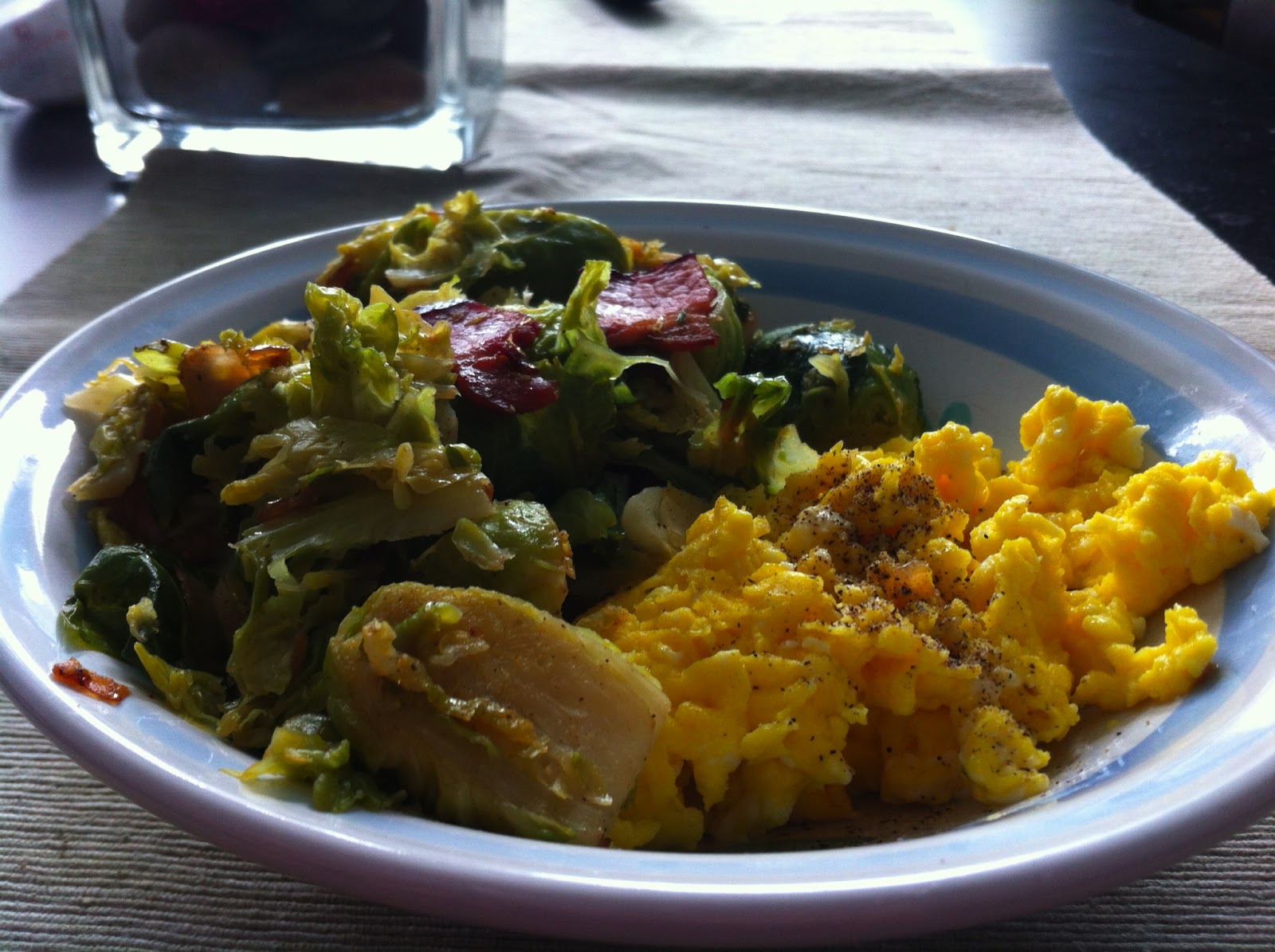
Paleo lunch... it's not caveman food, it's delicious whole, homemade food: free range eggs, organic shallots, brussel sprouts and side bacon from my butcher.
Brussel sprouts are full of I3C - protection against cancer *POW!* They promote estrogen metabolism and helps its elimination, for all of those lady problems! *BAM!* It's a low glycemic index food and is full of fiber!! *KABLAM!* Not just a triple threat, it's a quadruple threat!


My delicious lunch. Took 20 mins to make... perfect for a study break.
 So my annoyance with Dr. Christina Warinner is that 1) she doesn't quite understand what "paleo" means.... 2) I know this because she actually advocates for many of the principles that paleo stands for. 3) Worst title ever for a TED talk... I'm pretty sure she only did it to get views.

In truth, I follow a modifed paleo diet. It's modified to my life as a reasonable lifestyle that I will continue for the rest of my life. When you have as many food intolerances as me, you never consider going back to eating gluten and dairy - period. 

For anyone who's interested in paleo, I tell them to go at it hardcore for 30 days. That means, following every "paleo" rule for 30 days and no cheating. After that 30 days you can decide how you want to modify it. Maybe you want to follow the 80/20 rule (80% of your days are paleo, and the other 20% are "cheat" days). For me, it's an 70/30 on a daily basis. 

Wait.. newsflash: some creepy guy literally just walked up on my yard, pressed his face against our kitchen window and started peering into the house. Yeah, okay, I did the stupid thing by opening the door and asking what he was doing (but I had my game face on and was ready to punch him if he attacked me)... to which he said he was looking for someone... seriously??? Who does that?! I can't wait to get out of Toronto...

Okay, back to my original point. I love my brown rice toast in the morning with either almond butter or eggs. I also eat rice at our school's cafeteria, and I love sushi. Really, those are my cheats. I've gotten past the days where I clarify every single ingredient with my waiter at restaurants and just order as clean as possible, but stuff gets in. The amount of unnecessary soy, MSG and sulfites in our restaurant food is astounding; but a girl's gotta eat and sometimes I'm just too exhausted to cook. 

I'm often asked what my paleo rules are. Everyone can follow their own version of paleo. I suggest doing your homework and reading up on it from a few different sources and then follow the diet. Here are the basics:

Guiding principles of Paleo:

- Eat lots of veggies- as many as you want really. I love steaming them.

- Potatoes do NOT equal vegetables. Except for sweet potatoes. White/yellow potatoes are just starch with no real nutritional value. It's like eating a bunch of empty calories.

- Eat protein everyday. This doesn't mean gorging yourself on steaks, but you should be eating clean lean meat everyday: free range chicken, turkey, game fowl, grass fed (pasture-raised) beef, bison, lamb, wild-caught fish (not tuna.. tuna are the top of a fish food chain and therefore are laden with toxins), pork is fine, but again, know your sources.  Go to a butcher and ask where the meat comes from. Oh! and don't forget your free-range eggs (if tolerated)

- Have some fruit. If you're trying to loose weight, limit yourself to one serving per day. 

- Nuts and seeds are nice snacks. I LOVE almond butter on celery and cucumber slices. Peanuts don't count... they're a legume. 

- No beans or legumes (including soy). Too hard to digest and soy is just a terrible crop owned by Monsanto, and is modified beyond belief. It's also a top food allergen.

- Use oils like EVOO (extra virgin olive oil) and coconut oil. 

- Coconut everything is amazing... coconut water (for hydration), coconut milk (for baking with or as creamer), coconut flour (for baking cupcakes or as a thickener). 

- No grains, no gluten. At all. I'm not kidding. You'll be amazed at how you don't feel so "weighed down" after a meal. You'll also feel full faster if you just have veggies and some meat for your meals.

- No dairy. Dairy in Traditional Chinese Medicine is "damp"-forming. It makes you gassy and bloated; it builds up mucous, it can depress your immune system, and you can get calcium from other sources. Milk does NOT do a body good. 

- No corn. It's a useless crop that Monsanto mass-produces. That includes corn oil, corn syrup... if a label says "sugar" or "glucose/fructose" and doesn't give the source of said sugar, it's likely going to be corn-based. Scrap it. It's inflammatory!

- No sweeteners... I use real Canadian maple syrup or honey as sweetener or for baking. Aspartame is toxic. I have an article I can post if you don't believe me. MSG is also toxic. Read all of your labels!

Those are the basics. Eat clean food, know where it comes from. Opt for locally grown foods if you can. Eat mostly veggies and make sure to include protein everyday, especially in the morning! It's not rocket science; it's not a restricted way of life. It's a happy tummy and a healthy body. Take care of yourself! You only get one body in this lifetime - treat it well!

Wednesday, April 17, 2013

Birthing like a warrior

While studying for a maternal and newborn care exam, I was so happy to read the evidence for my feelings on birthing practices.

There is only one thing I find more disturbing than watching women MMA fighters and that’s watching a woman give birth in the lithotomy position. Seriously. Jacked-up women fighting each other in a ring… it just seems so unnatural. It’s disturbing... As is our current birthing practices in hospitals. The lithotomy position is what we in North America would call standard: woman in bed, laying on her back, her knees pulled up to her shoulders with her hips externally rotated. Seriously?!? How does this make any sense?

I think what really makes me mad is that men (in history) have completely taken over this amazing part in a woman’s life. I mean, childbirth (is one of the many things that) makes us the warriors that we are. Why are we so afraid of it? Why does Hollywood depict childbirth as the most excruciating pain, like being tortured? Why shouldn’t we dictate how we give birth? I mean, why do we always follow the birthing plan of hospitals and not the one we want?

Okay, deep breath. Hold the phone. I personally have never given birth to a child. I completely admit that I have no experience with labour, other than watching my sister go through it twice. There’s a part of me that still believes it may be physically impossible for me to ever push a child out from down there; but hey, I’ve seen it on YouTube, I’ve seen in it real life, and if my size-0 sister can do it, I think anyone can.

So about those studies I mentioned… It was found that women who squatted using a birth cushion had a significant reduction in operative deliveries and a significantly shorter 2nd stage of labor compared with delivery in the lithotomy position (Gabbe et al 2012). In another study, women in any upright position (squatting, kneeling, sitting, or standing per patient choice) had a greater chance of keeping an intact perineum than those in a laying position (Gabbe et al 2012). So really, if you have no serious health risks and no complications, you should probably consider an upright position.

I just can’t believe that our medical system hasn’t caught up with common sense. Haha, okay, wait, that’s a bit of a joke… I really shouldn’t be surprised. Someone just bombed a marathon (A what? A marathon!)… human society is f*%&ed up beyond belief.

But really, would you be more comfortable having a bowel movement if you were laying back in a recliner? No? You mean, it wouldn’t be easier to bear down while leaning back? This is what Oprah would call an “Aha!” moment.

Any mother out there reading this may shake her head because I am nulliparus, but I stand by the fact that when it comes to my body, I’m a warrior, and I don’t plan to lay back in a ridiculously awkward position while pushing a kid out. I will take charge, have a birth plan and be the boss of my own body. Hypnobirthing? Sounds amazing. Sitting in a warm bath? One of my favourite things! Acupuncture and herbs to move labor along? Sounds right up my alley. Much better than getting drugged up, snipped open, and forced into an uncomfortable position while pushing against gravity.

Have no fear! Welcome labour like the adventure of a lifetime that it is, and have a positive birthing experience. Do it the way YOU want, not the way you've seen it in movies or how medical doctors think it should be done.
Gabbe (2012) Obstetrics: Normal and Problem Pregnancies, 6th Ed.

Tuesday, April 9, 2013

It's like I'm searching for the Philosopher's Stone

As a naturopathic student, our profession often gets confused with that of homeopaths. No, we are not homeopaths, but we do include homeopathy in our "tool box" of interventions for treatment. The thing about homeopathy is that relatively very few people fully understand how it works. To me, it's like a form of wizardry, and I'm always searching for the evidence of magic.

Let's back up a second... what is homeopathy? Here's my personal explanation, though it may not be perfect: Have you ever heard of the ice crystal experiments? Where you have two jars of water, you play two different kind of music (one for each jar) and then when it freezes, the ice crystals have completely different organization; the soft, gentle music makes beautiful geometric crystals, and the rap or metal or "angry" music makes very disorganized crystals. You can do the same with words or images.

Well, homeopathy uses that same principle of making an "impression" on a substance and altering it. This is how remedies are made. But what do we use to make these impression? Everything imaginable! Minerals, plants, animals, fluids from compounds and from other organisms.. basically any substance at all.

So the principle is that "likes cures like." We take the characteristics of the element/animal/etc and match it to the symptoms of the patient. The remedy works by overpowering the disease in the patient and causes a shift in the patient's symptoms.

For example, if you ate part of a belladonna plant (which is toxic), you would likely experience: pupil dilation, face flushing, increased heart rate, headache, dry mouth constipation and hallucinations. So if we have a patient who experiences many of these symptoms and they fit the "picture" of this plant, we would give them the Belladonna homeopathic remedy. The remedy is belladonna diluted to so many degrees that the belladonna is no longer present in the substance, but it has made an impression on the solvent.

It sounds complicated, and it is. That's why we have such a hard time explaining it. And this is an amateur explanation. In truth, although it's the weirdest intervention, it's actually so much fun to practice. It's like this whole other world of medicine that reminds me a lot of magic.

I still have yet to experience a very profound homeopathic moment. I've tried remedies before and haven't been sure if they've made a difference. I'm currently taking a constitutional remedy and have no idea what the remedy is (it's like a surprise... I'm not suppose to know yet). So I just keep waiting for that shift to happen. It's matched to many mental and emotional aspects of myself so I'm told to just notice anything different about myself. My boyfriend likes to joke about all the things (remedies) I could possibly be. He'll start calling me everything imaginable... praying mantis, baby dragon, weeping willow... (Baby Dragon has stuck as a permanent nickname). 

Homeopathy is like the philosopher's stone - alchemy! It's so much fun to repertorize symptoms and match people's personalities to remedies (whether they be animals, plants or minerals). It's an energetic type of medicine that I will never fully understand, but practicing it feels like I'm at Hogwarts. It might not make a lot of sense to me as a student, but people around the world practice it in different ways and the effects it can have are amazing.

If anything, I think one of it's greatest strengths is allowing the patient to dig deeper through childhood influences, current behaviours and actions... making connections between their current symptoms and possibly the emotional and psychological root of them. It doesn't change your personality, but it shifts you so that you can allow your body to "heal". I personally have found it really helpful just to talk through issues that I have and make those connections. It helps me realize why certain things bother me, or affect me. I wouldn't call it counseling, but the session guides you to where you need to go. So I think the remedy has that same effect: It guides you... if that makes any sense.

So regardless if it's magic, a real true medicine, placebo, or an energy, I think it has its place. Believe whatever you want, but I think it's important to go through the process before knocking it down.

Saturday, March 23, 2013

It's a Catch 2.0

Evolution is a funny thing. I don't mean in a Darwin sort of way - but in a human-development way. Because of technology and human advances, we've solved many problems of our past, but we make all new problems. We think technology makes life easier, but does it? Really, I think it just makes life busier and faster... which is a good thing?

I'm currently trying to read Mitch Albom's The Time Keeper. And I say "trying" because, ironically, not having enough time is keeping me from finishing it.

We invented the concept of time; Of making calendars, of measuring out the days by sunrises and sunsets, and breaking them up into hours, and minutes and seconds. Because of technology, everything in our world is "instant" and we can technically fit more into a day.

Remember the days of snail mail? I actually used to write letters to friends and send them in an envelope with a real stamp and put it in a physical mailbox. It would take about a week to get a reply. But now we text each other and can communicate instantly.

I wanted to talk about it because it's such a huge source of anxiety and stress in our world. But how can we deal with it? How do we solve this problem? People (including myself) always say there is never enough time!

If we create more space in our day by being able to accomplish more in that time via technology, isn't there just more stress put on us to get more done and be MORE productive? It's a Catch 22... or a catch 2.0? I can submit assignments without actually having to be present in class. I can arrange my weekend plans with just a few taps on my iPhone. With the physical barriers gone, there's more pressure to get things done in a day.

Would it be terrible if we all just slowed down?!

It's funny that nowadays we get "mental health days" from work. We actually need to force ourselves to take time off, but how many of us actually do that? And really, would one day every 6-8 months make a difference? Who can afford to take more time off of work? We need to make money, we need to have society running, and we need to keep the economy going (I'm guessing... I really have no idea what's going on with the economy... Seriously, there could be a room full of monkeys sitting at desks crunching numbers on Casio calculators just making shit up for all I know.)

Side note: on the mention of monkeys, I'm pretty sure that's how our government is run. Everything seems so backwards to me. I'm going to be an ND in less than 2 years, helping to heal people rather than medicate and sedate them, thereby alleviating the stress on our health care system and yet the banks and the government insist on just taking all my money instead of helping me grow... and they're using my money to pay for other peoples bad health choices (due to lack of education... which is where NDs come in).

How f&@%ed up is that??? Some days I truly feel like I can take on the world and help make it a better place, but other times I'm so overwhelmed with how far we've come in screwing up our society.

How do we weight out the benefits of what we have and what technology allows us to do, with the risks of creating more stress and anxiety (among other health problems) from the society we've created?

Wednesday, March 13, 2013

The Black Sheep of the family

Every family has a black sheep. It's like Sesame Street: "One of these things is not like the others; One of these things just doesn't belong..."

Or as Meredith Grey once described "He's dirty Uncle Sal. Who embarrasses everyone at family reunions, and who can't be left alone with the teenage girls, but you invite him to the picnic anyway."

I think we encounter quite a few "Dirty Uncle Sals" in our and in many other professions. There are always going to be chiros, naturopaths, nutritionists and dieticians who bring down the profession and give us a bad name in the public eye.

I had to learn this lesson last week when a friend posted an "article" - which was actually another blog post - from a nutritionist in the states. The advice she posted seemed really absurd, so I took it upon myself to contact her for a list of her resources. It turns out all of her references were either cell culture studies, in vitro studies on rat tissues or mice studies (with small subject groups) and she used this information to come to the conclusion that a specific supplement was dangerous for humans.

I replied to her with several human studies (one which had 11,000 human subjects) which showed the exact opposite of what she was claiming. I then offered her the advice that she should be looking at human studies or meta-analyses rather than in vitro studies when she's giving health advice to the world.

Saying that something we prescribe is "dangerous" to all humans is a scare-tactic which the media often uses. It's really unfortunate that this is the way she's trying to reach others and give them health advice.

I had to do this research for myself, but it came with a lesson: Although I'm worried that the general public will take the wrong message from publicly-made information such as this, it's really not my job to seek out these people to prove them wrong. I don't have to justify my profession to anyone.

It's an unfortunate circumstance that the media (and basically anyone with internet access) can post whatever they want on the internet and when that information comes from a "professional," people accept it without question. So I'm going to take it upon myself to teach my patients when they come to me with questions, but I don't need to prove someone wrong. If you want to post really unreliable information on the web, that's your prerogative, but I'm going to be the type of practitioner that gives Naturopathic Doctors a good name.

So to all the Dirty Uncle Sals in the natural medicine world, I think most people can pick out the fact that we can't trust you "around the teenagers" but we'll invite you to the picnic anyway, and let you make your insane claims about what you think is right and wrong.

Tuesday, March 12, 2013

The Un-naturopathic naturopathic doctor?

When the topic arises, a patient will always ask me, "Do you drink coffee?" And I want to answer truthfully, but at the same time I want to set a good example. I think there comes a time when you just have to be honest and hope that your patients realize that you're not perfect.

But I've heard this before... you go to your family doctor who is a smoker, or who is overweight, and you think "This guy is suppose to be my doctor and help me be healthy, and yet, he/she is not healthy him/herself? What a hypocrite!" Seeing as how one of the naturopathic principles is "Doctor as Teacher," I don't want to be a hypocrite. So where do we draw that line?

Yes, okay, I love my coffee in the morning. I don't drink pots of it, but my one mug in the morning is what gets me going first thing. It also helps with those morning workouts. I don't fill it with garbage sweeteners and milk... I have my almond milk and 1/2 tsp honey - but here I go again trying to justify it to myself. And really I should be admitting to that occasional extra mug that I'll drink in the afternoon if I'm having a super rotten day...

A naturopathic doctor once told me that "One cup of coffee is a tonic, and more than that is toxic." I try to keep this in mind, but really, we're human, and coffee is addictive. So I think my internal struggle is, (and I wonder if we all feel this way) how do I tell my patients to do something if I don't follow it myself?

Maybe that's why I work so hard at keeping in shape, eating healthy and trying to maintain a healthy mental status - which is a whole other struggle!

This program is so un-naturopathic. The hours are irregular and varied, we're stressed all the time with our workload, we're given group assignments at the most inconvenient times (well, in my opinion), we're all sleep deprived, and trying to cram in as much information as we can without our brains exploding. Meditation? I can't get my brain to stop thinking! Yoga? Haven't been to a class in weeks (probably more like months). Home-cooked meal every night? Who has the time to go grocery shopping all the time?! Maybe that's why I'm so in love with my slow cooker... because finding time to cook dinner is like trying to find an extra hour in a 24-hour day... and truly that only happens once a year for daylight savings time.

The one thing we have going for us is knowing how to take care of ourselves when things go wrong. I wonder how many of us CCNM students are on an adaptogen right now? How many supplement with more than the recommended dose of vitamin D per day? How many of us use homeopathic remedies when we're ridden with stress? And don't forget about those cold socks and steam inhalation when we're sick. We do a lot for ourselves, but how much of that is caused by this program in the first place?

When does trying so hard to be healthy become unhealthy?

My hope is that a patient will respect me more for being honest with them, but I guess only time (and experience) will tell.